







If you are trying to work out whether you need a pool safety certificate in QLD, the confusing part is that the certificate is only one step in the process.
You also need building approval before construction starts, a barrier inspection before the pool is filled past 300mm, and registration on the QBCC pool register. Most of the anxiety around Queensland pool approval comes from mixing those steps together. Here is how to actually get it clear.
Article Summary
|
Do you need a pool safety certificate in QLD?
Yes, but not as the first step.
If your pool can hold more than 300mm of water, you generally need building approval before construction starts. The Pool Safety Certificate comes later and deals with ongoing compliance, not the initial approval to build.
That is the part most people miss. They hear “pool safety certificate qld” and assume it covers the whole approval path. It doesn’t.
Do you need building approval before construction starts?
Yes. If your pool can hold more than 300mm of water, you need building approval before construction starts.
Most homeowners arrange this through a private building certifier, though a council certifier can also handle it. The key point is that this happens before excavation, delivery, or installation begins.
What happens during construction?
Once construction is underway, the pool barrier needs to be inspected before the pool is filled past 300mm of water.
That inspection is usually handled by the certifier managing the approval. If the barrier complies, the certifier issues the completion certificate and the process moves to the next stage.
What is a QLD Pool Safety Certificate, and how is it different from building approval?
It is separate from building approval.
Building approval covers getting the pool built and signed off. A QLD Pool Safety Certificate comes after that, through a licensed pool safety inspector, and confirms the safety setup remains compliant.
For private, non-shared pools, the certificate is generally valid for 2 years. For shared pools, such as those in multi-dwelling complexes, it is generally valid for 1 year.
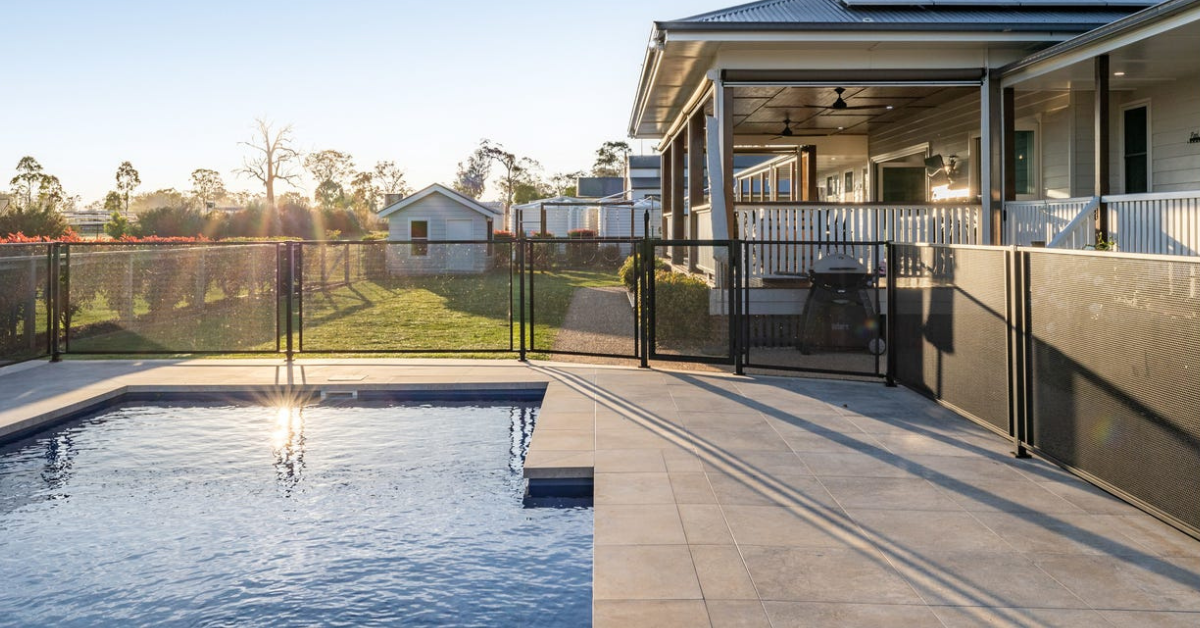
What fencing standard applies in Queensland?
QBCC refers to this as the pool safety standard on its own guidance pages, rather than clearly spelling out the exact Australian Standard number.
You will often see AS1926.1 referenced elsewhere, but the safest approach is to confirm the exact requirements for your site with your certifier or pool safety inspector. Fence compliance can vary based on the layout of the property, the pool type, and the surrounding structures.
Do you need to register your pool with QBCC?
Yes, and the register itself is free.
In many cases, the certifying professional will forward the details needed for the QBCC pool register after the completion certificate is issued. If not, you can usually register the pool yourself through the QBCC portal using your property address.
What is the actual order of steps?
This is the part that makes the process feel more complicated than it actually is. Each step is manageable on its own. The problem is assuming one document covers the rest.
Step 1. Building approval
Lodge for approval before construction starts through a private certifier or council certifier.
Step 2. Build
Build the pool and barrier to the required safety standard with your installer.
Step 3. Fence inspection
The certifier inspects the barrier before the pool is filled past 300mm.
Step 4. Completion certificate
The certifier issues the completion certificate.
Step 5. Pool Safety Certificate
A licensed pool safety inspector confirms ongoing compliance.
Step 6. Register
The pool is added to the QBCC pool register by the certifier or through self-registration.
QLD Pool Safety Certificate FAQs
The takeaway most new pool owners miss
Queensland pool compliance has a few moving parts, but it is more manageable once you separate each step.
Building approval, barrier inspection, completion sign-off, the QLD Pool Safety Certificate, and QBCC registration all matter. They just do different jobs.
This article is general information based on Queensland Government and QBCC sources as of September 2026. It is not legal advice, and requirements can change. Always confirm current requirements with a licensed certifier or QBCC before you begin.
Talk to our team about your site and next steps
Working through approvals for a Queensland build? Talk to SPKD about your site, your certifier path, and what you will need to line up before installation starts.
Keep reading
What To Expect When You Buy a DIY Fibreglass Pool Kit
Do Pools Become a Burden? An Honest Look at Long-Term Ownership

-1.png?width=400&height=266&name=Blog%20Images%20(21)-1.png)
.png?width=400&height=266&name=Blog%20Images%20(18).png)
.png?width=400&height=266&name=Blog%20Images%20(16).png)
