



Quick answer: The most expensive DIY fibreglass pool mistakes happen before anyone digs: ordering a shell before approvals are sorted, not checking crane and side access, skipping an underground services check, and booking trades in the wrong order. On site, the big ones are a poor base, uneven backfill and leaving fencing to the end. Each is avoidable with a plan and the right licensed trades.
Key takeaways
- Most costly mistakes are planning mistakes, not building mistakes. Approvals, access and sequencing decide your budget.
- DIY doesn't mean digging. You're managing licensed trades, not doing the labour, so your job is to book the right people in the right order.
- Backfill and water level must rise together. Getting this wrong is the single biggest on-site risk to a fibreglass shell.
- Plan the pool fence from day one. A pool can't be filled and used until it has a compliant barrier.
- Budget for the whole project, not just the shell: paving, fencing, electrical and landscaping often add as much again.
Why do DIY pool installs go wrong?
Most owner-managed fibreglass pool installs go smoothly. When they don't, it's rarely because a homeowner tried to lay pipes or drive an excavator. It's because something wasn't checked early enough: the approval path, whether a crane can reach the yard, or which trade needed booking first. Fixing a planning mistake after the shell has arrived is where the thousands go.
Below are the ten mistakes we see most often across NSW, Queensland and Victoria, what each one tends to cost, and how to avoid it.
Mistake 1: Ordering the shell before approvals are sorted
Every state requires some form of approval or certification for a new pool, and the path differs. In NSW, if you coordinate two or more contractors and the work is valued at more than $10,000, you need an owner-builder permit (NSW Government). In Queensland you'll need building approval through a private certifier and a pool safety certificate before the pool can be used.
How to avoid it: confirm your approval path and timeline with your council or certifier before you lock in a delivery date. Our state guides walk through it step by step: NSW pool approval and registration and QLD pool safety certificates.
Mistake 2: Not checking access and crane reach
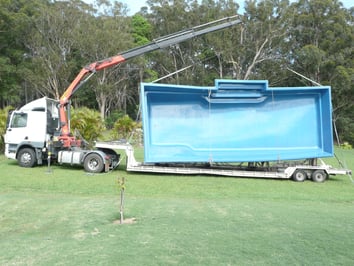
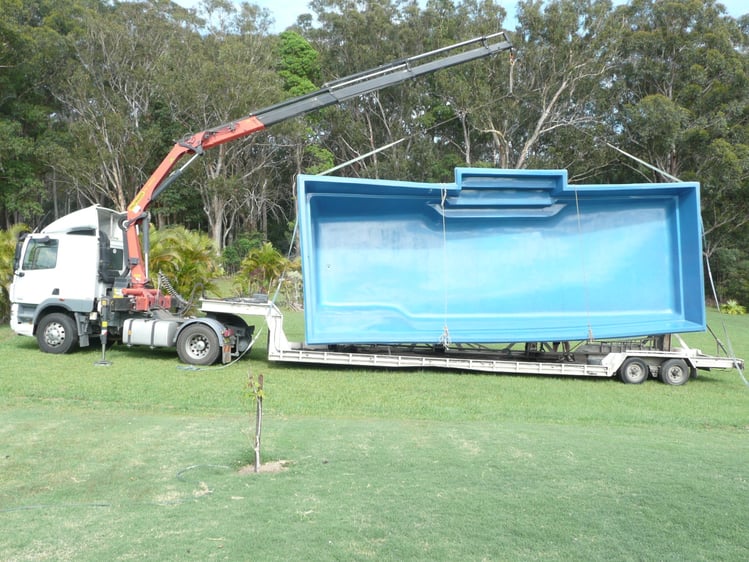
A fibreglass shell arrives in one piece, so it needs a clear path in. Narrow side access, overhead power lines, trees and steep driveways can turn a standard lift into a much larger crane, a road closure or traffic control.
How to avoid it: measure side access, look up, and send photos of the street and yard whole speaking to our team. Ask your crane operator for a site inspection if anything looks tight. Lighter shells help here, which is one reason fibreglass beats precast concrete on crane cost (see fibreglass vs precast concrete plunge pools).
 Crane lifting a fibreglass pool shell on delivery day
Mistake 3: Skipping the underground services check
Hitting a water main, gas line, sewer or communications cable during excavation is expensive, dangerous and delays everything.
How to avoid it: lodge a free enquiry with Before You Dig Australia (BYDA) well before excavation day, and have your excavator review the plans. Private lines on your own property may not appear on BYDA plans, so a private service locator is worth the money on older blocks.
Mistake 4: Booking trades in the wrong order
An owner-managed install is a sequence: excavator, crane, plumber, electrician, concreter, fencer, then paving and landscaping. Book them out of order and you pay for idle time, a second crane visit or a trade who can't start.
How to avoid it: work backwards from your delivery date and confirm lead times early, especially excavators in spring. Our complete list of trades you need, in booking order is the checklist to use.
Mistake 5: A poor base under the shell
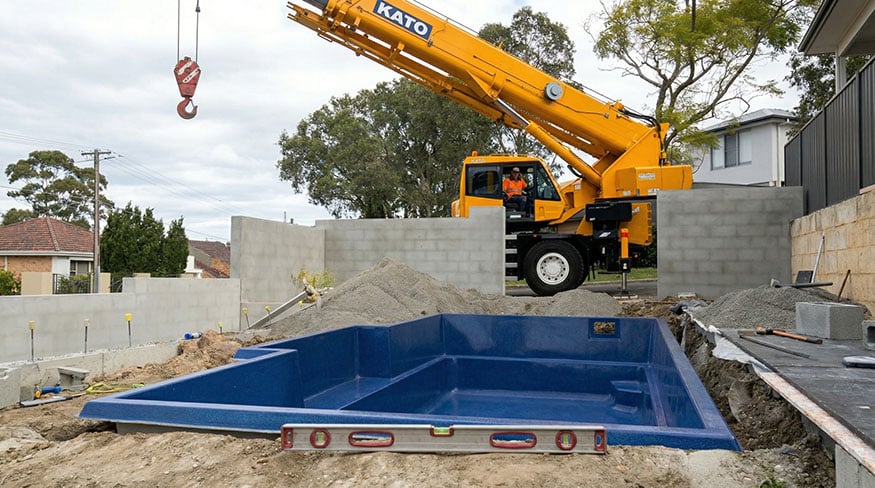
A fibreglass shell relies on a level, compacted, correctly specified base. An uneven or soft base can lead to stress on the shell, uneven waterlines and warranty problems.
How to avoid it: follow the installation guide for base material, depth and levels, and check levels before the shell goes in.
Mistake 6: Backfilling without filling the pool at the same time
This is the biggest on-site risk. Backfill pushes in on the walls; water pushes out. If one gets ahead of the other, walls can bow or move.
How to avoid it: raise the water level and the backfill together, in stages, as set out in the installation guide. Brief your installer or excavator on this before the day.
Mistake 7: Ignoring groundwater
High water tables, clay sites and heavy rain can create upward pressure under an empty or part-full pool. In the worst case, a shell can lift.
How to avoid it: ask your excavator about groundwater on your site, plan drainage, and never empty a fibreglass pool without professional advice.
Mistake 8: Using unlicensed plumbing or electrical work
Electrical work must be done by a licensed electrician in every Australian state, and pool plumbing connections should be done by a licensed plumber. Cutting corners here is a safety risk, can void equipment warranties and will be picked up at certification.
How to avoid it: check licences before you book. NSW, QLD and VIC all have free online licence checks.
Mistake 9: Leaving the pool fence until the end
Pool barriers must comply with Australian Standards and your state's rules, and the pool can't be filled and used until a compliant barrier is in place and certified. Some states also require temporary fencing during construction.
How to avoid it: design the fence with the pool, book your fencer early and budget for it from day one. Read pool fence rules in Australia before you finalise your layout.
Mistake 10: Budgeting for the shell, not the project
The shell and equipment are only part of the cost. Excavation, crane, plumbing, electrical, fencing, paving and landscaping can add as much again, and spoil removal on rocky or clay sites catches many people out.
How to avoid it: use our pool price calculator for a real starting figure and check what's in an inground pool package so you know what's included and what isn't.
Pool installation mistakes at a glance
| Mistake | What it can cost | How to avoid it |
|---|---|---|
| Shell ordered before approvals | Storage, re-delivery, weeks of delay | Confirm approval path and timing first |
| Access and crane not checked | Larger crane, road closure, traffic control | Measure access, check power lines, send photos |
| No underground services check | Service repairs, safety risk, delays | BYDA enquiry plus private locator if needed |
| Trades booked out of order | Idle time, second crane visit | Book backwards from delivery date |
| Poor base | Shell stress, warranty risk | Follow the installation guide exactly |
| Backfill ahead of water | Wall movement | Raise water and backfill together |
| Groundwater ignored | Lifting risk, drainage rework | Ask about water table, plan drainage |
| Unlicensed plumbing/electrical | Failed certification, voided warranties | Check every licence |
| Fence left to the end | Can't fill or use the pool | Design and book the fence early |
| Shell-only budget | Running out of money mid-build | Price the whole project up front |
How long does a well-planned install take?
With approvals sorted and trades booked in order, the on-site work for a fibreglass pool is measured in weeks, not months. See how long it takes to install a fibreglass pool for a realistic timeline, and our fibreglass pool installation page for how the process works with SPKD. If you're aiming to swim by Christmas, start the approval step as early as August.
Frequently asked questions
What is the most common fibreglass pool installation mistake?
Poor planning before excavation: ordering the shell before approvals, not checking access, or booking trades out of order. On site, the most serious risk is backfilling without filling the pool with water at the same time.
Can I install a fibreglass pool myself in Australia?
You can manage the project yourself and save on builder margins, but licensed trades do the specialist work. Electrical work must be done by a licensed electrician, and in NSW coordinating two or more contractors on work over $10,000 needs an owner-builder permit.
Do I need to check for underground services before digging a pool?
Yes. Lodge a free Before You Dig Australia enquiry before excavation, and consider a private service locator for lines on your own property.
When should the pool fence go in?
Plan it from the start. A pool can't be filled and used until a barrier that complies with AS 1926.1 and your state's rules is installed and certified.
What hidden costs catch DIY pool builders out?
Crane upgrades for tight access, spoil removal on rocky or clay sites, fencing, paving and electrical work. Price the whole project, not just the shell.
Plan it properly and the build is the easy part.
Get a real price for your pool in under a minute, then talk to our team about your site, access and approvals.
Building in your state? See fibreglass pools in NSW, Queensland and Victoria, and read DIY vs installed fibreglass pools to compare routes.