







.png?width=1240&height=562&name=Cape%20Classic%20(1).png)
Semi-Inground Pools: The Sloping-Block Answer Most Pool Companies Won’t Offer
Quick answer: A semi-inground pool is often the most practical fibreglass pool option for an Australian sloping block. It sits partly in the ground and partly above it, with the high side buried and the low side exposed and finished with decking or cladding. On sloping blocks, semi-inground pools can reduce excavation, soil removal and retaining costs compared with a fully inground pool.
Article summary
- What a semi-inground fibreglass pool is and how it works on a slope
- How it compares with fully inground and above ground options
- Where the savings usually come from on sloping blocks
- Which SPKD pool models may suit semi-inground installs
- What to confirm before publishing and before choosing a model
If you’ve had a pool quote on a sloping block, you’ve probably heard some version of this: “You’ll need a lot of cut and fill, a retaining wall, and probably concrete.” That’s usually where the budget falls over.
There’s a simpler option that doesn’t get mentioned often, because it doesn’t suit the way most pool companies build. A semi-inground fibreglass pool works with your slope instead of fighting it.
What is a semi-inground pool?
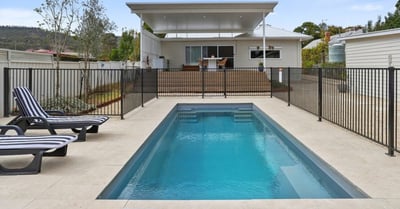
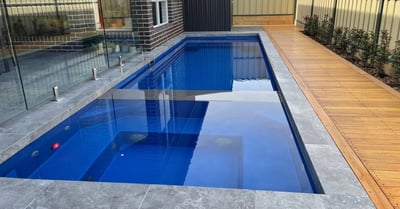
A semi-inground pool is installed with part of the shell below ground level and part above. On a slope, the uphill side is dug in and the downhill side is exposed. The exposed walls are then finished with timber or composite decking, cladding, or a planted garden bed, so it looks deliberate rather than half-finished.
This only works with a shell engineered to stand without full backfill support. SPKD’s above ground fibreglass pools are built with extra support ribs around the outside for exactly this reason. Once the landscaping is done, you don’t see the ribs.
Semi-inground vs fully inground vs above ground
| Fully inground | Semi-inground | Above ground | |
|---|---|---|---|
| Excavation | Full dig + soil removal | Partial dig into the slope | Minimal |
| Retaining on a slope | Often needed | Often reduced | Usually not needed |
| Rock risk | Highest | Lower | Lowest |
| Look when finished | Flush with the ground | Raised edge, great with decking | Fully raised, decked around |
| Best for | Flat, easy-dig blocks | Sloping blocks | Slopes, rock, tight access, deck-level pools |
Why semi-inground pools work well on sloping blocks
- Less dirt to move. You’re not levelling the whole slope, so there’s less digging and less soil to truck away.
- Less retaining. The pool itself does some of the work a retaining wall would otherwise do on the downhill side. Your engineer will confirm what’s needed.
- A built-in wall height. A raised edge on the low side can help with your pool barrier design. Check with your certifier, because barrier rules are specific.
- It makes a feature of the view. Sloping blocks often have the best outlook, and a raised pool edge with a deck lets you look out over it.
What goes under and around a semi-inground pool?
A semi-inground pool still needs a properly prepared base, typically crusher dust or a slab, and a concrete ring around the pool to help prevent movement. Every site is different, so your engineer or certifier will set the exact specification. SPKD includes certified engineering drawings with every kit to support that process.
Which pools can go semi-inground?
Our above ground range includes models that suit semi-inground installs on sloping sites, from compact courtyard pools to entertaining pools with bench seating.
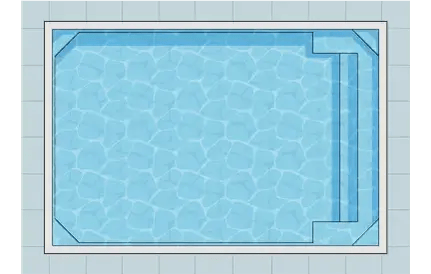
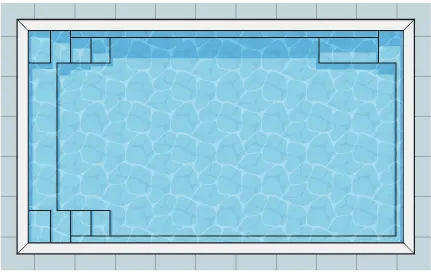
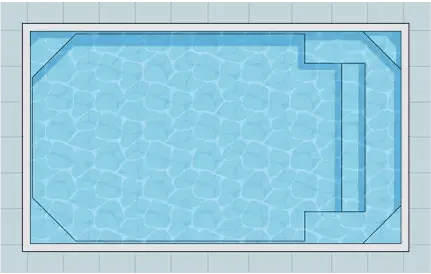
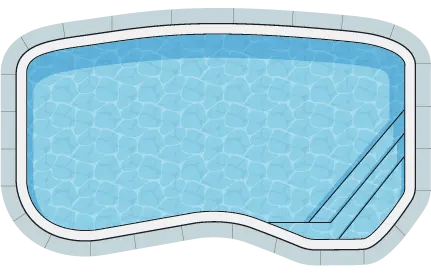
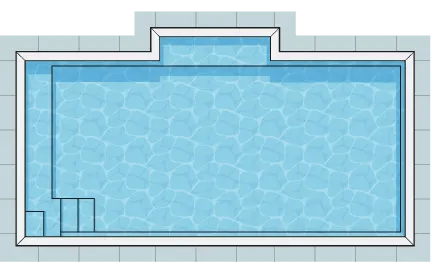
- Cape Classic (5m, 6m, 7m x 3.5m): wide bench seats, dual entry steps and room to entertain.
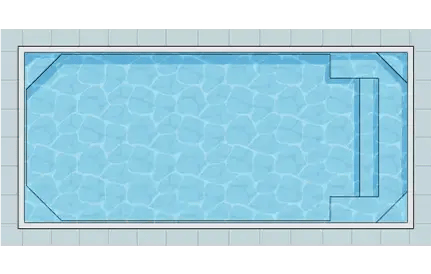
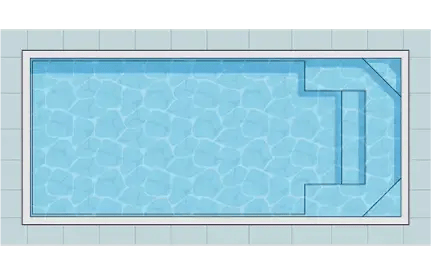
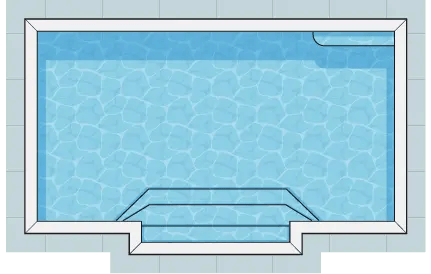
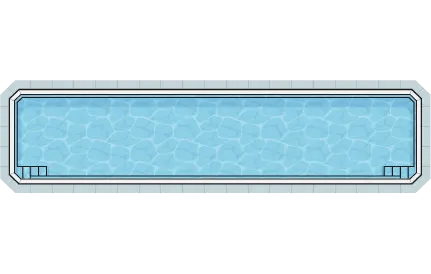
- Royal Slimline (4m, 6m x 2.5m): long and narrow for side-slope blocks.
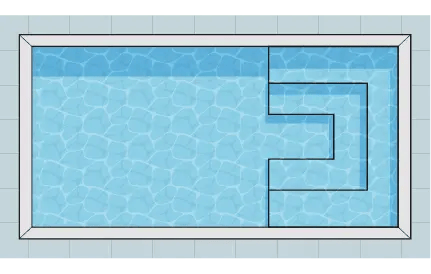
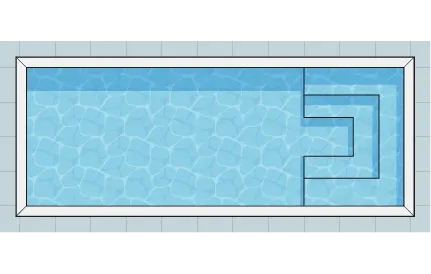
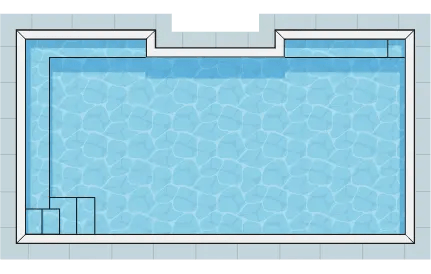
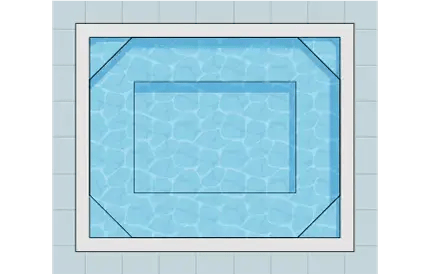
- Lennox (3.6m, 5m x 2.5m): flat 1.31m floor, great for families with young kids.
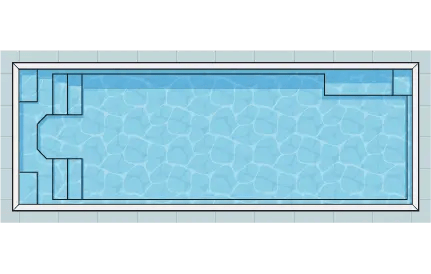
- Yarra (3m, 4m x 1.9m): the courtyard option.
How much does a semi-inground pool cost?
The kit price is the same as the above ground version of your chosen model: shell, equipment package and delivery. Packages start from $4,699 (Signature). Your installation cost depends mostly on how much of the slope you dig into, the base and concrete ring, crane access, and the decking or cladding on the exposed side.
This is where managing your own build pays off. You’re not digging the pool yourself, you’re managing the people who do. Customers who coordinate their own trades typically save $10,000 to $30,000 compared with a fully installed pool.
Pro tip: Get your engineer or certifier to look at the site before you lock in a model. Knowing how deep the uphill side can go, and what retaining you still need, lets you compare semi-inground and fully inground on real numbers, not guesses.
Is a semi-inground pool right for you?
If your block slopes, if you’ve been quoted for big retaining walls, or if you want a raised pool that connects to a deck, a semi-inground fibreglass pool is worth a serious look. If your block is flat and easy to dig, a standard inground install is usually simpler.
Get My Sloping Block Pool Price
Related reading
- How Much Does an Above Ground Fibreglass Pool Cost in Australia?
- Above Ground Fibreglass Pools: All You Need to Know
- DIY vs Installed Fibreglass Pools in Australia
- Tips for Building a DIY Pool in Australia
FAQs
-
Can you put a fibreglass pool semi-inground?
Yes, using a shell engineered to stand above ground. SPKD’s above ground fibreglass pools have extra support ribs so they can be installed partly or fully above the soil.
-
Is a semi-inground pool cheaper than an inground pool?
On sloping or rocky blocks it often is, because you dig and retain less. On flat, easy-dig blocks the difference is smaller.
-
Does a semi-inground pool need a fence?
Yes. Any pool that can hold more than 300mm of water needs a compliant barrier. A raised pool wall doesn’t automatically count as a barrier, so check with your certifier.
-
What do you finish the exposed side with?
Common choices are timber or composite decking, cladding, rendered block or a garden bed. Many owners run a deck from the house straight to the pool edge.
-
Do I need an engineer?
Yes. Your site needs engineering sign-off for the base, the concrete ring and any retaining. SPKD supplies certified engineering drawings for the pool itself.
.png?width=400&height=266&name=Cape%20Classic%20(1).png)
.jpeg?width=400&height=266&name=6m%20Slimline%20Medium%20Blue%20Above%20Ground%20(2).jpeg)
.png?width=400&height=266&name=Blog%20Images%20(24).png)
